/en/About-Canon/Inside-Canon/2026/space-themed-events-moonshot

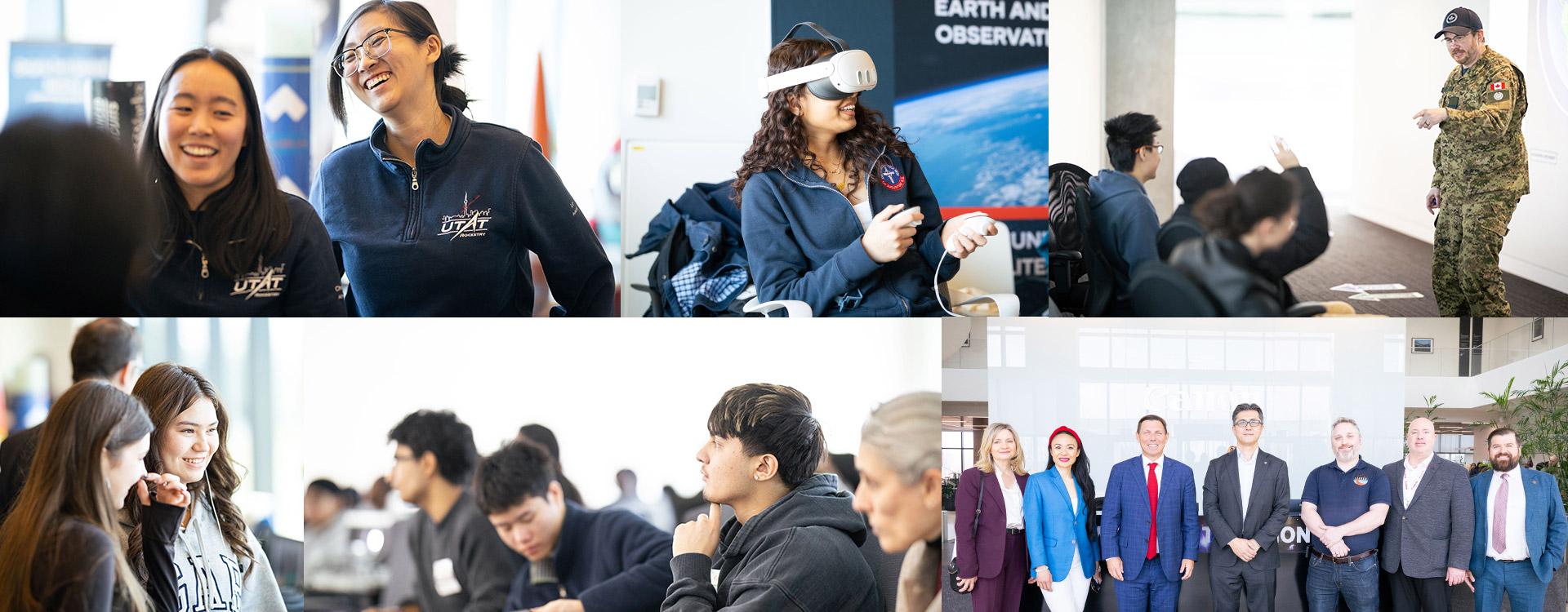
Canon Canada was excited to once again host Moonshot, a space-themed interactive event designed to inspire students and generate interest in the Canadian space sector. The timing proved serendipitous, the event coinciding with the Artemis II mission, with Canadian astronaut Jeremy Hansen farther away from planet Earth than anybody had ever been before.


Moonshot is a joint effort between the City of Brampton, Launch Canada, InspireTech and Canon Canada. It came from the need to create a workforce of tomorrow to help contribute to the goal of having a $40 billion Canadian space economy by 2040, said Kyle Boyko, president and board chair at InspireTech Canada, as well as the event organizer.


“Today, we're just under $4 billion,” said Boyko. “It's important, as we build the jobs of the future, that we have a workforce that is understanding of what career paths exist, and opportunities like this get them out of the school and bring them into the real world to see how STEM can be used as a launchpad.”


Evolution of Moonshot and Canon Canada’s Interest in Space

This was the fourth Moonshot event. Nearly 1,500 high school students have now taken part. “Most of the students, with their background in science, technology, engineering and math, have significant interest in the fields that underpin space, rocketry, rovers, satellites and defense,” said Boyko. The day involves hands-on workshops and engaging sessions with those already in the field. Moonshot has been a spring and a fall event central to the Greater Toronto Area and Brampton. In the next year, Boyko hopes to expand regionally into markets like Sudbury, Ottawa and other major centres.


In recent years, Canon Canada has journeyed farther into the space realm. It continues to explore new ways to utilize its imaging technology, and is now a member of both Space Canada and the Ontario SatCom Consortium. Hosting Moonshot is a natural extension of that curiosity and commitment.


“Canon Canada has opened its doors for the last two years to create all the Moonshots,” said Boyko. “It’s brought together the community, it’s brought together education, it’s even brought together the province and different C-suites that are focused on hosting the Ministry of Economic Development, Job Creation and Trade’s (MEDJCT) space tech cluster meeting. If it wasn’t for Canon, I don’t believe that Moonshot would be on the trajectory that it is today.”
Spring Moonshot Partners

The day began with introductory remarks from Brampton Mayor Patrick Brown. He highlighted how the city has become a magnet for the space sector in recent years. He hoped Moonshot would inspire the next Jeremy Hansen. “Maybe there are individuals here who will play a big role in this field,” he said. “This is the growing part of our economy. There’s going to be tons of opportunities in the years ahead. On behalf of the council, on a day like today, we want to say, ‘Shoot for the moon.’”


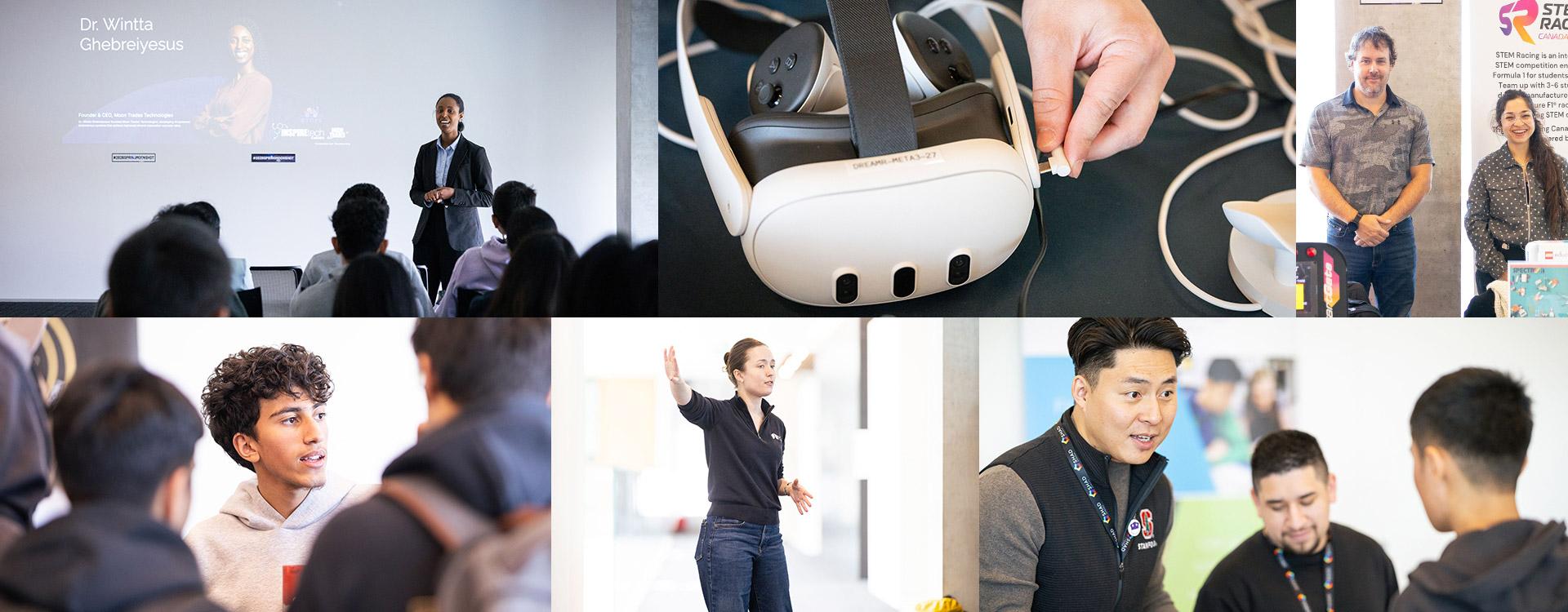
Five student groups rotated through a customized schedule, each attending three of the seven seminars.


Launch Canada:

Launch Canada is a not-for-profit organization driving talent development for Canada’s aerospace industry. They provide 2,000 university students with an outlet to have real, hands-on, practical learning experiences through tackling complex aerospace projects. They run the largest advanced rocket engineering competition in the country. Launch Canada Challenge starts in September. Over the ensuing 11 months, teams design their projects and create documentation and reports, with everything culminating the following August in Timmins, Ont., with a week-long rocket launch event. At Moonshot, Ariyanna Kresnyak, a volunteer with Launch Canada and university student studying rotating detonation rocket engines, spoke to the high-schoolers about rocket science and how engineers design and build rockets.


7 Wing:

7 Wing (Space) is a unit within the Canadian Armed Forces. Space has become a competitive and sometimes hostile place for competing nations. 7 Wing’s job is to defend satellites from surveillance, interference and threats. Booth visitors saw their in-house-built Common Operating Picture software, which covers space domain awareness from every possible angle. Students also learned about 7 Wing’s unique dynamic: While the command structure of the unit is all military personnel, many of the specialty positions – such as developers and senior engineers – are civilians.


MDA Space:

MDA Space is an aerospace contractor known for the development of the Canadarm system on the International Space System. They use virtual reality technology to train internal personnel and prepare astronauts for spacewalks. At the booth, MDA Space offered a demonstration of one of those applications, where attendees could explore a highly detailed model of the International Space Station. As part of the team’s interactive seminar, an MDA Space materials engineer talked about her career path and the opportunities the organization offers in the space sector.


Moon Trades:

Wintta Ghebreiyesus, founder and CEO of Moon Trades, and Aric Malcolm, founder of Ontario Tech Operations on Planetary Surfaces, walked the students through their respective career paths and explained how they’re using AI to find the most valuable minerals in a more sustainable way. Starting on Earth in some of the most remote and harshest environments, they plan to scale that technology for space. They’ve created PEBBLE, the “Google Maps of Mining,” a rover-enabled analysis tool that collects up to 50 times more data than a traditional geologist.

NordSpace:

NordSpace is a privately funded, vertically integrated aerospace company dedicated to establishing Canadian sovereign space launch capabilities. While they recently won a multi-million dollar Department of National Defence grant to develop its Tundra orbital launch vehicle, their message to attendees went beyond engineering. Representatives outlined their 25-year vision for Canada in space. They also spoke to the students about expanding STEM to STEAM, emphasizing that stories of space innovation need to be shared, making the Arts an integral part of the aerospace equation.


NASI:

The North American Space Institute is a specialized technical school that trains and certifies the aerospace workforce. Their session broke down the emerging markets in satellite services, lunar logistics and orbital manufacturing.


Camp Canon:

Canon Canada hosted a beginner workshop on foundational camera skills and photographing the night sky. Students learned essential camera settings, exposure control and composition techniques. A Camp Canon instructor showed the high-schoolers how to use long-exposure techniques to photograph the moon, stars and Milky Way.


The event also featured a dedicated Scale Up stream where participants simulated founding a space economy startup from concept to exit. Teams competed to secure funding and navigate high-stakes challenges. The fast-paced exercise tested their creativity, strategic thinking and ability to adapt under pressure.


The Next Steps

While the students explored future career paths, the Ontario Ministry of Economic Development, Job Creation and Trade (MEDJCT) hosted a space cluster meeting. Attendees focused on developing strategies to help the province efficiently capitalize on the projected growth of the space economy.


Canon Canada hopes attendees to both events left feeling inspired about an exciting future.